
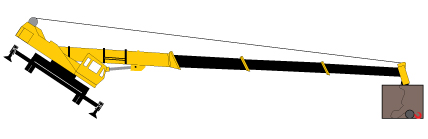
Most times when we think of an accident involving a crane tipping, we suppose that it was due to a heavy load being too much for the crane to lift. However, tipping accidents can happen in a multitude of ways.
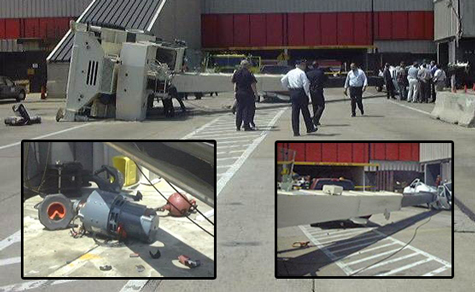
In the case of this accident, the crane was only lifting a small electric motor (lower left picture), probably only a couple hundred pounds. However, the outriggers were not set and the crane tipped either due to the length of the boom or the boom angle being too low. What should have been a simple lift became a very costly one. Thankfully there were no injuries, but the van (as seen in lower right picture) was never the same again.
Remember just because a crane has a long reach, doesn’t mean you need to use all of it. Many times tipping is a result of the boom being extended beyond the necessary length and improper set up.
8 Points to Keep Lifts Stable
The loss of stability resulting in a tipping incident or accident shouldn’t be a common occurrence. Accidents are costly and can usually be avoided by remembering a few key points:
- Make sure the operator is a certified and/or qualified mobile crane operator; they have the education, knowledge and experience to operate the equipment and make the lift.
- There are many crane designs, read the manufacturer’s manual to make certain you understand the operating quadrants, superstructure positions and the load ratings stipulated for each area of operation.
- Pay close attention to range diagrams, as they provide a graphic representation of safe boom positions.
- NEVER lift loads where the load chart does not provide ratings.
- NEVER lift more weight than what’s posted in the load chart.
- Always make sure outriggers are set appropriately for the lift and are sufficiently stabilized.
- Never allow the operator to “lift by the seat of their pants” if you can start to feel the crane tipping, then it is already too late, the crane has been overloaded.
- Always try to position the crane to make the initial lift in the least stable direction, and then swing to a more stable direction. This will prevent an accidental overload of the crane during the lift. In other words, if you miscalculate the load weight you will find out right away and before the load gets into a dangerous position that causes you to tip.
As always comment below, give us a call, or email us if you have questions about mobile crane stability or even need a subject matter expert for an incident. We would be happy to assist, after all, Safety through Education is more than just our motto, it’s our guiding principle.
Note this post was a excerpt from a 6-part series on Mobile Crane Stability published in 2015. To learn more on this topic, check out these posts:
Part 1: Mobile Crane Stability
Part 2: Gravity, Balance & Leverage
Part 3 Tearing Apart the Crane