
 Part 1: The Cleanliness Of The Cab
The crane cab is equivalent to the operator’s office. Whether its near the ground or high in the sky, operators typically work long hours, staying alert and ready for the task at hand. So what does the cleanliness of the cab say about an operator?
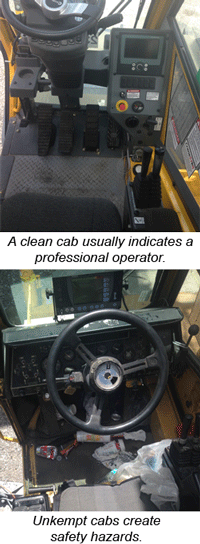
An organized and well-kept operator’s cab may be an indication of the professionalism of the crane operator. Over the last 39 years, Crane Tech has seen many operator cabs that remain clean, organized and well kept. This generally indicates an operator who cares for their crane. More often than not, clean and organized cabs belong to the most professional operators; those who aim to bring the highest degree of professionalism to their job.
When we find an operator’s cab with accumulated dirt, tools, waste, newspapers, and other non-related reading materials we frequently find an unprofessional attitude. An unkempt cab can cause interference and distractions. Things that you might not even think of:
- Oily rags can lead to off gassing in the cab which can lead to headaches/light-headedness (especially in the winter if the heater is running);
- Items on the floor can roll under foot pedals and interfere with proper operations;
- Liquids and spit cups (especially those without lids) can be easily spilled and typically liquids and energized electronics do not mix well;
- Sugary drinks (even just the dregs in an open, empty can) have the potential to draw stinging insects and could lead to a potential mishap with an out of control crane if levers get knocked while trying to get the insect out of the cab;
- Food debris can lead to bad odors and draw insects and rodents, who may eat more than just the waste, but often in the case of rodents find they like the taste of insulation on wires, seat cushions, and hoses as well;
- Paperwork, magazines, newspapers, etc. when placed on the dash can lead to a reflection on the glass that creates a visual hazard for the operator;
 Mud/dirt that is not scraped off before entering the cab can build up on the grooves of the non-slip surface of foot pedals overtime, reducing the effectiveness of the grip;
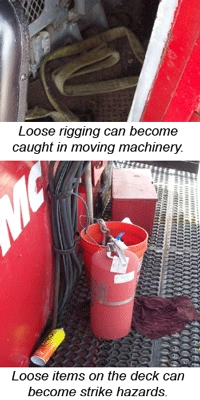
- Slings need to be properly stored so that they do not get caught in rotating machinery;
- Tools, rigging hardware and screws not properly stowed can fall down causing injury to personnel and/or equipment; and
- Unsecured items such as fire extinguishers or tool boxes on the cab running board or deck of the crane can be knocked loose due to movement and become a strike or caught in hazard.
Simply put, an operator who does not care for their equipment may lead to not caring for the job tasks required.
In the United States, there are regulations that addresses the items in the cab. OSHA 29 CFR 1910.180(i)(3) Cabs. (i) “Necessary clothing and personal belongings shall be stored in such a manner as to not interfere with access or operation.” (ii) “Tools, oil cans, waste, extra fuses, and other necessary articles shall be stored in the tool box, and shall not be permitted to lie loose in or about the cab.” ASME B30.5-3.4.10(a) “a portable fire extinguisher, with a basic minimum extinguisher rating of 10BC, shall be installed in the cab or at the machinery housing.”
We suggest that it is the operator’s responsibility to ensure the cab is maintained, organized, clean and uncluttered. However, supervisors and crane owners should inspect their operator cabs to observe their condition to ensure compliance with regulations, and hold their operators accountable to these standards.
Stay tuned next week for more on the construction of the cab in Part 2 of our series on Crane Cabs.
 Want to show us your cab?
Post a public picture of your crane cab on social media with #cranecab for your chance to win a Crane Tech T-Shirt!
Contest ends 7/15. Winner randomly chosen from public photos with #cranecab noted between 6/22-7/15). For more instructions on how to do this, click here.