
In part 1, we explored what the cleanliness of the crane cab conveys about the operator, now in part 2 we will take a closer a look at the construction of the cab and some features designed to keep operations safe. But first, lets look at a scenario: An operator has a dirty cab, so every time they operate they have to kick the debris in the bottom of the cab out of the way. The window is dirty and has a large crack across it, so the operator is continually trying to find an area of unobstructed view. It starts to lightly rain and the operator turns on the worn windshield wipers that proceed to smear the residual dirt mixed with the rain all over the windshield. The operator then tries to use the windshield washer fluid only to find that it has never been filled.  The cab starts to fog because of the moisture and when the operator tries to utilize the window defogger it doesn’t work because; of all the debris blocking it (i.e. operator’s manual, newspaper, magazines, rags, etc.) Now the operator cannot see properly and an accident occurs.
By themselves these concerns may or may not have caused an accident, but the accumulated deficiencies increase the likelihood of something going wrong. Depending how everything fell into place, one of the above factors became the FINAL FACTOR. While risk cannot be eliminated 100%, it can be mitigated, especially when dealing with these features of the crane cab.
Windows
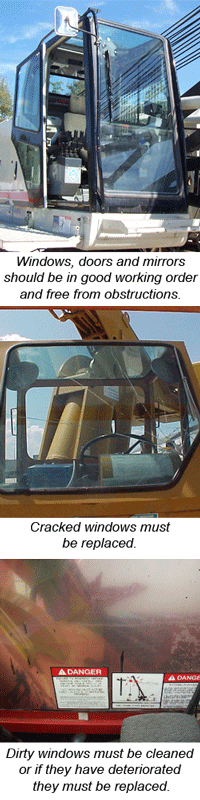 The operator’s cab is designed to protect against weather. Modern cranes have electronic systems such as: load moment indicators (LMIs), rated capacity indicators, and rated capacity limiters, which must be protected from the elements. As a result, cab glass weather seals should be intact and not allow moisture to the interior of the cab. Windows and doors should be closed during wet weather and at night. Windows that open provide ventilation and must be properly secured to prevent accidental closure.
The cab must provide the operator with a clear and unobstructed view of the load, the boom tip, and the surrounding job site. Visibility to either side is provided to give the operator 180-degree or greater vision to the site. Cab windows shall be constructed with safety glass or equivalent and they must remain free of cracks and clean at all times. A window that has a crack in it can produce a blinding effect when sunlight or other forms of light refract off the crack. A window that is not clear (permanently foggy) due to a deterioration in the safety glass impacts the operators ability to see clearly and should be replaced to ensure safety.
Windshield wipers are typically provided for the front and overhead windows. Wipers must effectively clear the window so vision is not obstructed. Wiper blades should be replaced regularly and wiper fluid (if equipped) should be filled regularly.
Doors
The cab door must be restrained from accidentally opening/closing and should be lockable to prevent unauthorized entry when left unattended, such as at night. The door adjacent to the operator shall open outward (swinging doors) or if sliding, slide rearward to open. If equipped with a dual-entry cab, such as the one Altec introduced in 2014 on their truck-mounted cranes, the front door is shatter resistant to maintain safety standards.
Mirrors and Cameras
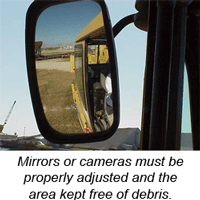 Mirrors and/or cameras provide required views (i.e. hoist drums [main and aux], outriggers [extended and/or retracted positions], and a back-up camera) that are normally blind to the operator. These areas are to be kept clear of debris that would hamper the camera or mirror’s effectiveness. Operators and owners should ensure functional mirror/camera placement and that all mirrors/cameras are clean, free of cracks and properly adjusted.
Stay tuned next week for more on the safety aspects of the cab in Part 3 of our series on Crane Cabs.
 Show Us Your Cab Photo Contest
Post a public picture of your crane cab on social media with #CraneCab for your chance to win a Crane Tech T-Shirt!
Contest ends 7/15. Winner randomly chosen from public photos with #CraneCab noted between 6/22-7/15). For more instructions on how to do this, click here.