 In this series we have discussed the cleanliness and construction of the crane cab. In the final post we will provide a quick examination of a few of the safety and support features of a cab that help keep operators comfortable, so they can make lifts safe.
Climbing Safety
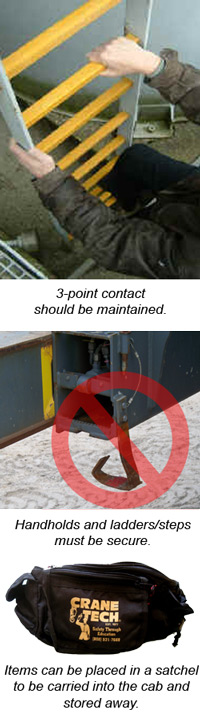 Most mobile cranes require at least a few steps to make it up to the operator cab, but this is also where a leading cause of injuries to operators occurs. Maintaining a “3-point contact” can help operators prevent falls while entering or exiting the cab. The 3-point contact rule requires that two feet and one hand or two hands and one foot remain in contact with the equipment at all times. An operator should always face the machine when exiting and entering and they should not attempt to carry loose items (i.e. newspaper, lunch box, thermos, coffee, cell phone) while entering or exiting the cab. Have someone pass items up after entering the cab, or place items in the cab prior to entering. A small satchel (such as Crane Tech’s Belt Pack) can often hold needed items and be small enough to store out of the way. Also remember that handholds and non-skid/skid resistant steps should be provided as needed, and they must be securely fastened to the equipment.
Seats
Have you ever sat in an uncomfortable seat for three to four hours at time? Remember those “pins and needles” in your backside? Don’t underestimate the need for a comfortable seat as some operators spend an entire shift sitting. A seat should be reasonably supportive and may even provide some adjustment options for the operator. Poor seating can lead to poor posture which leads to back pain, leg pain, and other health maladies. Operators should be sure to remain hydrated and if possible get up and move around every so often, to help eliminate the possibility of health concerns such as blood clots.
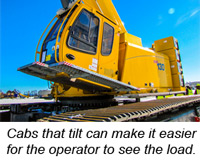 While some operator cabs actually tilt up to lessen neck strain, many machines are not equipped with this feature. As a result, a headrest is helpful when loads are handled at high boom angles, this provides shoulder and neck support to help alleviate neck strain.
While seat belts are only required in the operators cab if the crane can be driven from that station, however most manufacturer’s put them in the operators cab anyway. Seat belts are an important safety feature that should not be overlooked—they should be worn during transit and travel.
Accessory Systems
Make sure all cab systems and accessories remain in proper operating condition. Fans, air conditioners, heaters and other cab comforts may seem like non-essentials, but operators need to be sharp and aware at all times. These minor conveniences may reduce risk by helping operators be comfortable in their cabs helping them to safely accomplish lifts.
If it’s too hot sweat can roll into the operators eyes, stinging and hampering vision or a drop of sweat can create a blur on glasses, not to mention the dehydration that could occur. If it’s too cold, loss of feeling can occur in fingers and toes, making it difficult to feel levers and pedals. But remember, always operate these systems within the manufacturer’s specifications.
As we wrap up this series, remember that the crane cabin is equivalent to the operator’s office. While it doesn’t have to be fancy, it should be kept clean with good visibility. Parts and systems need to kept in good working order. There are many risks in material handling, so control the things that you can—a well-maintained cab helps create a comfortable operator which leads to a safe operator.
What are your thoughts on this? Have a story to tell? Comment below and let us know. Plus we would love to see your crane cab! Just post a picture and you could win!
 Show Us Your Cab Contest
Post a public picture of your crane cab on social media with #CraneCab for your chance to win a Crane Tech T-Shirt!
Contest ends 7/15. Winner randomly chosen from public photos with #CraneCab noted between 6/22-7/15). For more instructions on how to do this, click here.