In the absence of training, workers often do what ever they need to do in order to get the job done. At Crane Tech we often find untrained riggers are unaware of the dangers from using slings or rigging gear incorrectly. When riggers use what they were “taught by co-workers” or just copy what their previous other co-worker did, they could be putting their loads and lives on the line. Don’t get us wrong, we think hand-me-downs are fine for clothes and toys, when it comes to lifting and rigging knowledge, a casual “here let me show you this” probably isn’t the best policy.
If your company has documented training that includes technical and practical instruction with written examinations and performance testing, you deserve to be commended. Time and again field workers rely solely on what has worked in the past and hand-me-down knowledge. This approach may not meet OSHA standards, which requires employers to “qualify” their riggers.
According to OSHA 1926.1425(c)(3), When employees are engaged in hooking, unhooking, or guiding the load, or in the initial connection of a load to a component or structure and are within the fall zone, the materials must be rigged by a qualified rigger. According to OSHA 1926. 1401, A qualified rigger must meet the definition of a qualified person. Which according to the standard means “a person who, by possession of a recognized degree, certificate, or professional standing, or who by extensive knowledge, training and experience, successfully demonstrated the ability to solve/resolve problems relating to the subject matter, the work, or the project.”
Test Your Knowledge
 Want to test your knowledge or your rigging team’s knowledge? Take our simple quiz, adapted from our Qualified Rigger Level 1 Curriculum:
Test Your Rigging Knowledge Quiz
So how did you fare? Was it easy or were a couple of questions tricky? If you or your riggers have trouble making a 100% then it might be time for training or re-training.
Be Proactive
The bottom line is, be proactive about training. Never assume that the old way is the right way. Never assume that because the worker received training at their last job they know what they are doing. Informal and undocumented training may be as good as no training at all, so put a good record system in place that helps to ensure all workers who are rigging loads have received proper training and testing. This will allow employers to qualify their riggers according to OSHA and will help to keep job sites safe from near misses and accidents.
Remember, Safety through Education is more than our motto, it is our guiding principle. If you need to help maintain the safety of your site by having your workers taught the proper way to rig, give us a call 800-290-0007 or contact us for a quote. Just click on the links if you want to find more about our programs, including Qualified Rigger Level 1, Qualified Rigger Level 2, or the Train-The-Trainer options.
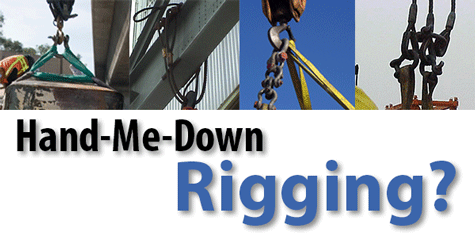
P.S. Wondering what the correct answers are? Check out the answer key here. Also, Feel free to comment below if you can identify the rigging concerns from the photos used in this post.