When purchasing new rigging, Crane Tech cannot stress enough the importance of an initial inspection before any rigging is placed into service! How do YOU KNOW it is what the manufacturer and rigging shop says it is, if YOU don’t take the time to check it out yourself?
Let’s look at a couple of real life examples on some slings:
1” x 16’ 2-ply Twisted Eye Nylon Slings
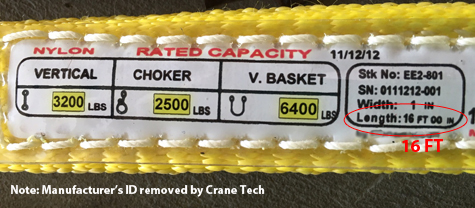
Check out the tag… it says 16 feet. Now check against the tape measure, do any of these actually measure 16 feet? Nope. Not a single one. They aren’t really even close, what do you do?
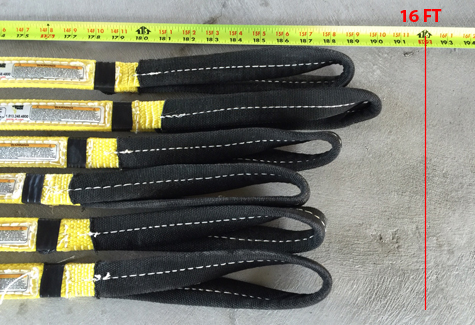
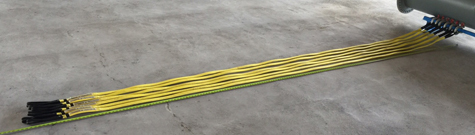
We’d recommend that you talk to the rigging shop. Find out if they are within acceptable tolerance (most likely +/- 2% for single and double ply slings and +/- 4% for three and four ply slings) or maybe there is an unknown manufacturing concern. If there is indeed a manufacturing concern, any reputable rigging shop would replace the slings with new ones. If they are within acceptable tolerance, then record the correct length in a log book or on a retained inspection form so that it can be checked against during the next periodic inspection.
2” x 4’ Slings
Check out these tags and the slings… sure there are a few differences. One is polyester, the other nylon. One is a 2-ply the other is a single ply. They were made with different eye configurations, but the key point is, they are both marked 4 feet. But one is, and one is not… What do you do now?
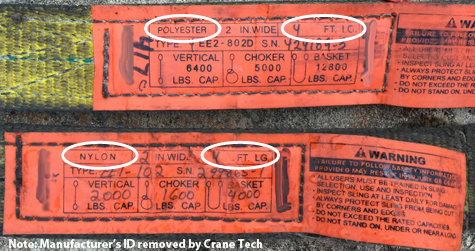
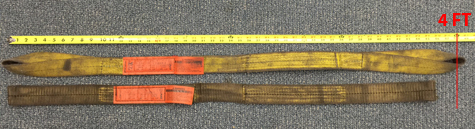
If the slings were new, Crane Tech would recommend that the flat sling be returned to the rigging shop, however clearly these slings have been used. So we have to question, did they ever undergo an initial inspection? Did the twisted eye one start out the same length of the flat eye and it is now stretched? If the sling length was never validated in the beginning, how do you know? Do you scrap both of them? Do you say they are both ok?
Is it Worth It?
Sure an initial inspection takes time and effort, but is it any less painful to throw dollars down the drain on rigging that might be ok, but you have no idea because there was no benchmark to start with? In the words of the Crane Tech’s Field Services Manager, “Having a documented rigging inspection program is one of the most cost effective things a company can do for their rigging operations. The time it takes to do an initial inspection and follow up with periodic inspections is very little when compared to the cost of rigging. An effective inspection program can save hundreds to thousands of dollars when areas of concern are uncovered, the proper rigging is put in place, and the information is fed back into the training program to be addressed.”
If you need more information on how to inspect your rigging or want to start a rigging inspection program at your location, check out our Rigging Inspector training program. If you need to order updated rigging inspection forms, they are available on page 5 of our products catalog. Most importantly, make sure that everyone can go home safely by keeping your rigging and lifting operations safe!
Remember Safety through Education is more than just our motto, it is our guiding principle. For previous Hooked On Crane Tech posts related to this topic, check out: