The kids are headed back to school… maybe you should be too. If you’ve been thinking about signing up for a safety training course —
(And How to Choose the Right Partner) The right training doesn’t just check a box—it builds a safer, more knowledgeable, skilled and capable team.
Distractions are everywhere, but for those in cranes and other load handling equipment, they don’t just slow down productivity—they can lead to serious, even fatal,
Crane Tech is proud to announce the recipients of our 2025 Father’s Day Scholarship—an initiative created to support aspiring crane operators who are committed to
Safety training in the crane, rigging and specialized transportation sector is an ongoing process that is constantly evolving. Trends develop into standards and then standards
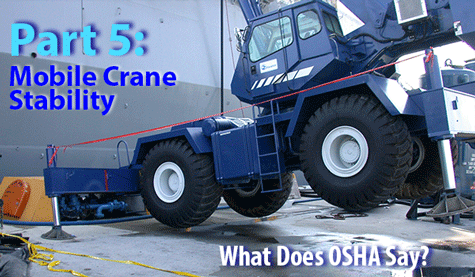
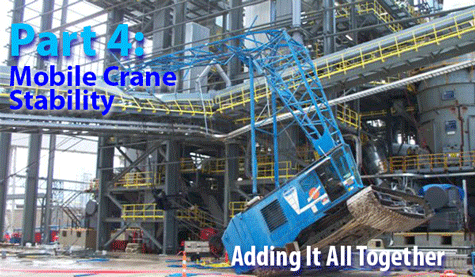
When we began this series, we mentioned that tipping is the most common type of accident with cranes. To that end, we are trying to
As we’ve discussed earlier in this series, it would not be safe to operate a crane that didn’t have reserve stability. It would be like
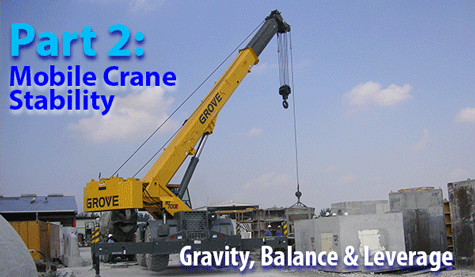
Thank goodness it is not necessary for crane operators to calculate the leverage for a lift. However, how leverage is calculated is essential for crane
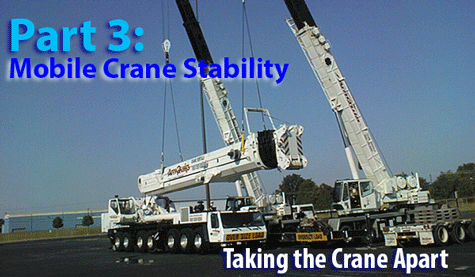
Before we go any further on mobile crane stability, we need to look at the mobile crane itself. Pulling it apart and looking at how
In Part 1 we took a high-level look at mobile crane stability, now its time to bring it back to the basics. A mobile crane
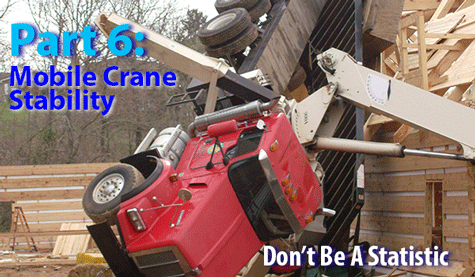
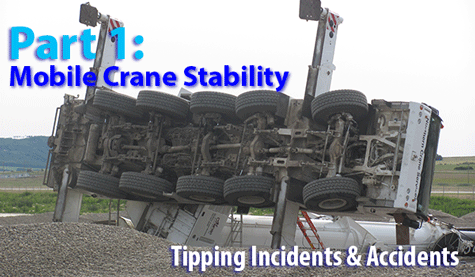
Of all crane-related accidents, tipping accidents are the most common. Crane operators who fail to follow the manufacturer’s guidelines regarding crane ratings are sure to
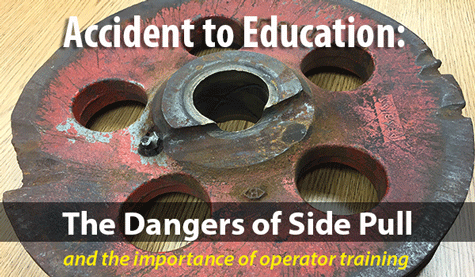
When we educate new mobile crane operators, one of the many topics we cover is the importance of lifting from directly above the load’s